
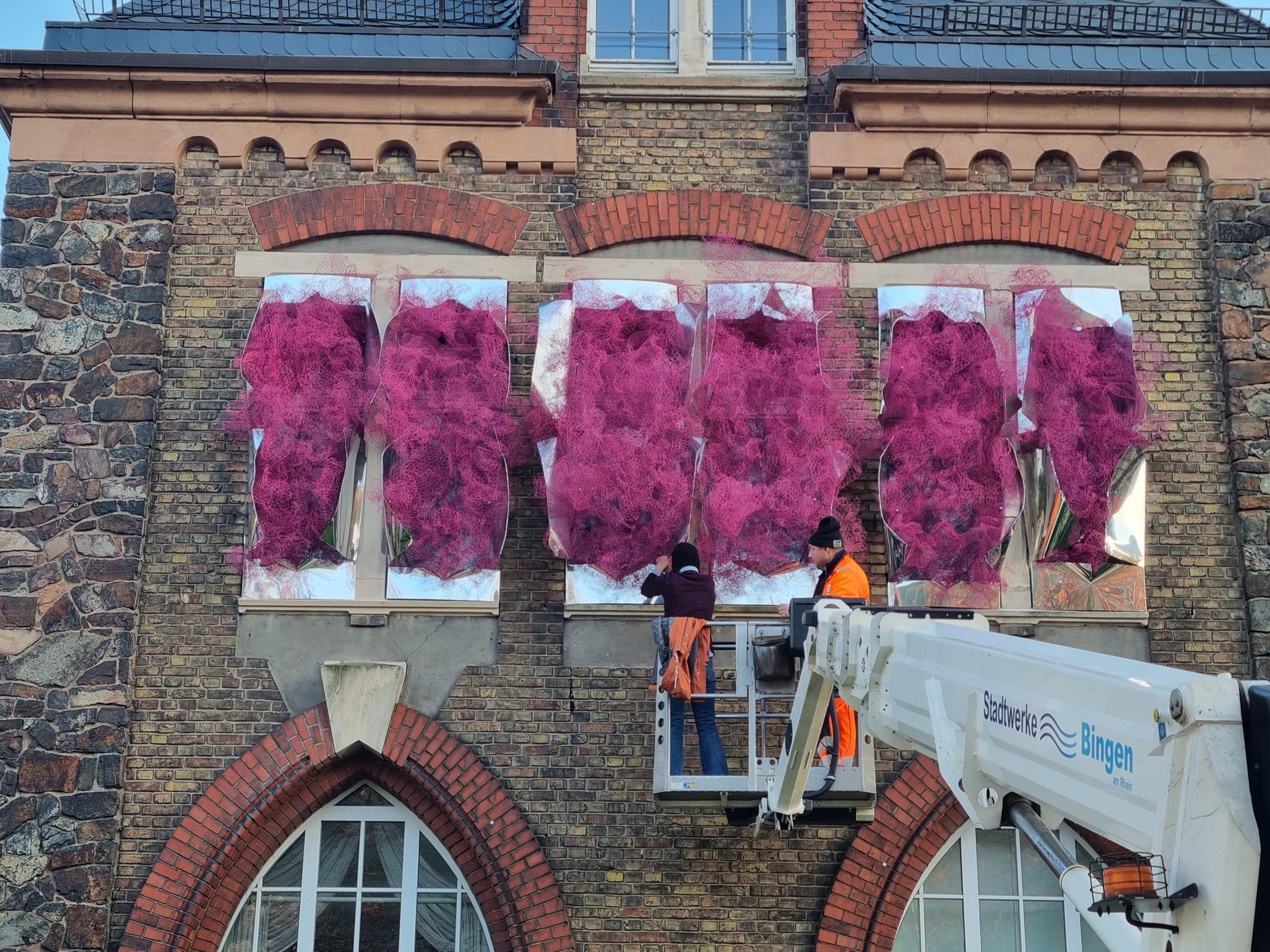
The Bingen Sculpture Triennial kicks off in mid-May and I’m really looking forward to taking part. I recently set up my installation at the Museum am Strom. Here are a few fresh impressions and thoughts on a project as exciting as it is challenging.
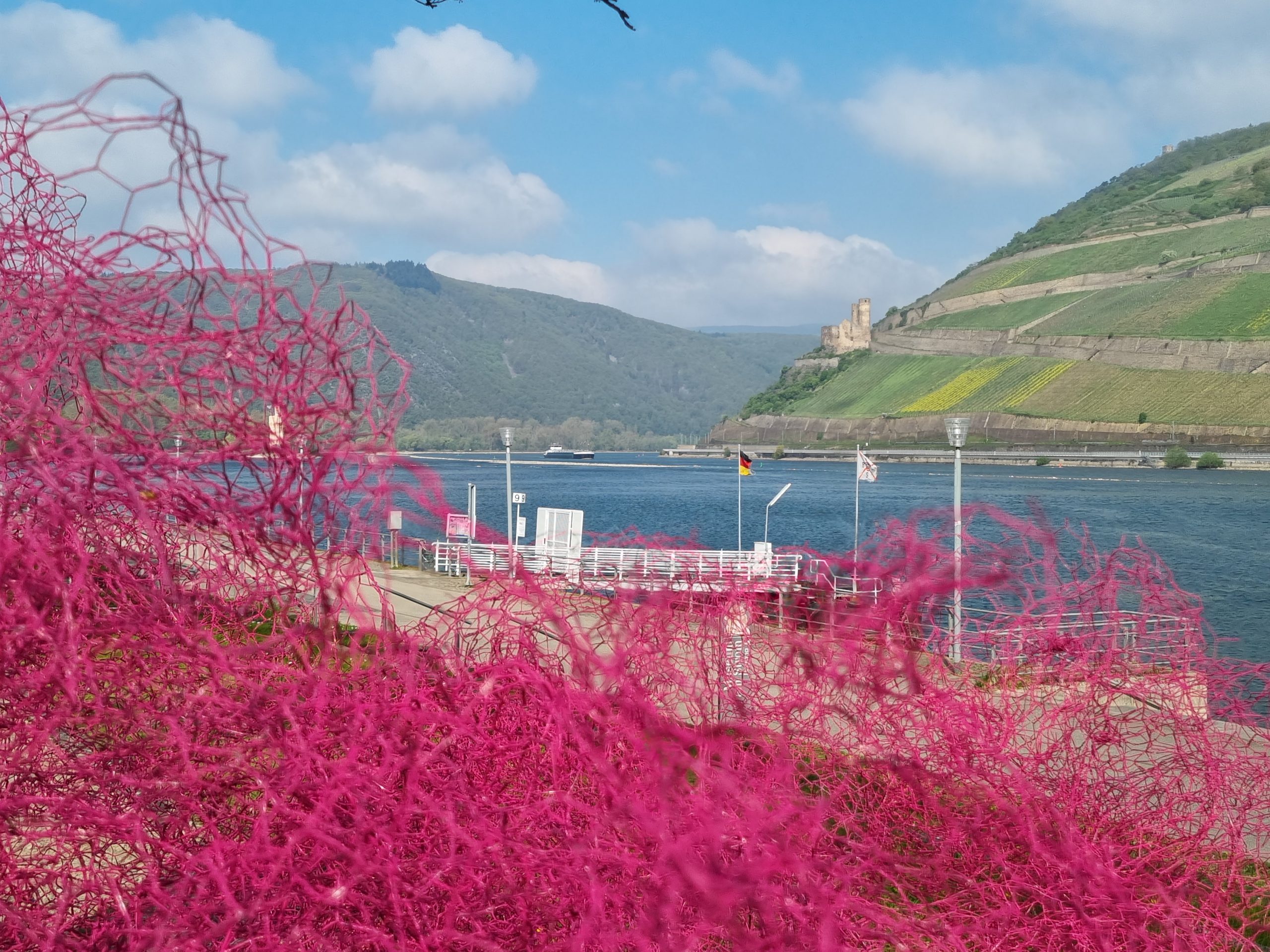
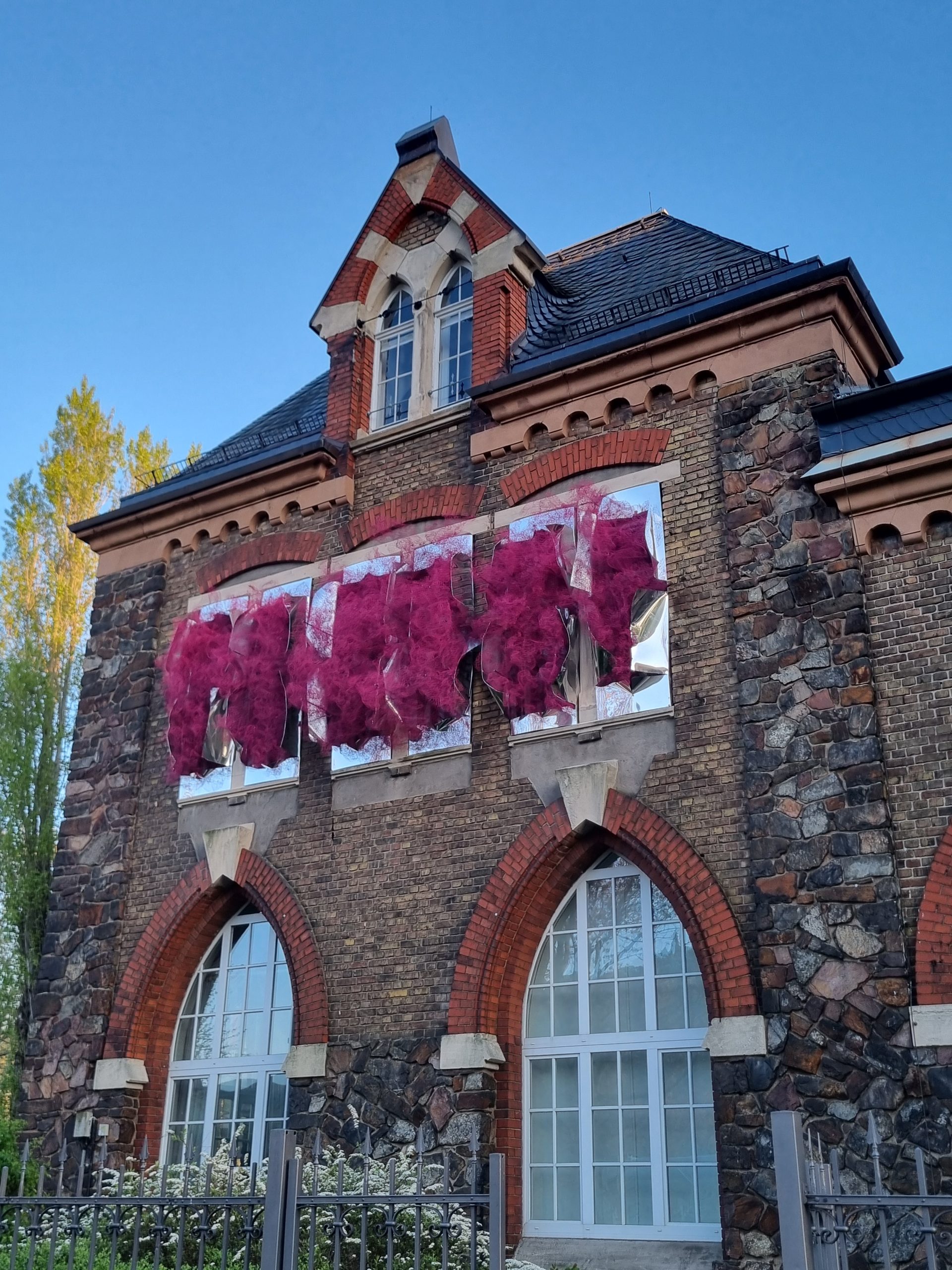
From 16 May to 4 October, around 20 international artists will transform Bingen’s riverside promenade and parts of the town centre into an open-air museum. This year’s theme is ‘Connection and Cohesion’. In this context, I have the honour of temporarily giving the Museum am Strom a completely new and unusual look with an installation of pink cloud-like structures spilling out of the first-floor windows.
Fits with my art: The place and its history
Change and transience, connecting traditions, as well as new perspectives and new beginnings – these are the themes that have always been central to my art. My clouds, made of pink wire mesh and sometimes appearing to float, flow or billow, are also intended to inspire the viewer to reflect on these central themes of our existence. In this respect, both the overarching theme of the Triennial mentioned above and the specific setting of a museum of local history (focusing on Hildegard von Bingen, Rhine Romanticism and the town’s history from the Romans to the present day) suit me perfectly.
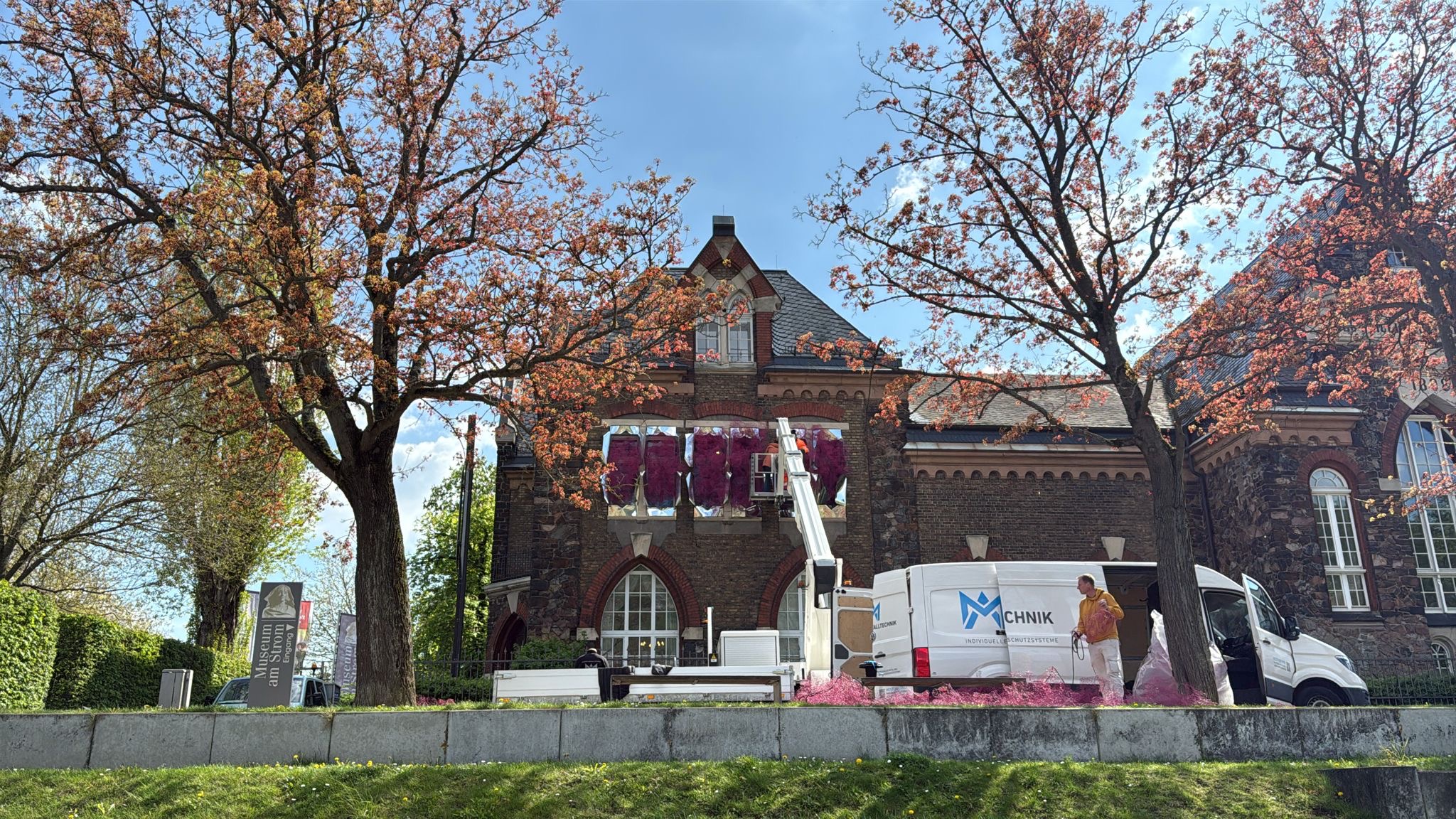
The building of the Museum am Strom – a former power station dating from 1898 with a rather dark brick and rubble-stone façade – stands, through its new function, as a positive symbol of change, bringing people together and connecting them with history. In this respect, it offers the ideal conditions for my artistic approach and my formal language, yet it also presents a number of challenges.
Art is also craftsmanship: challenges and solutions
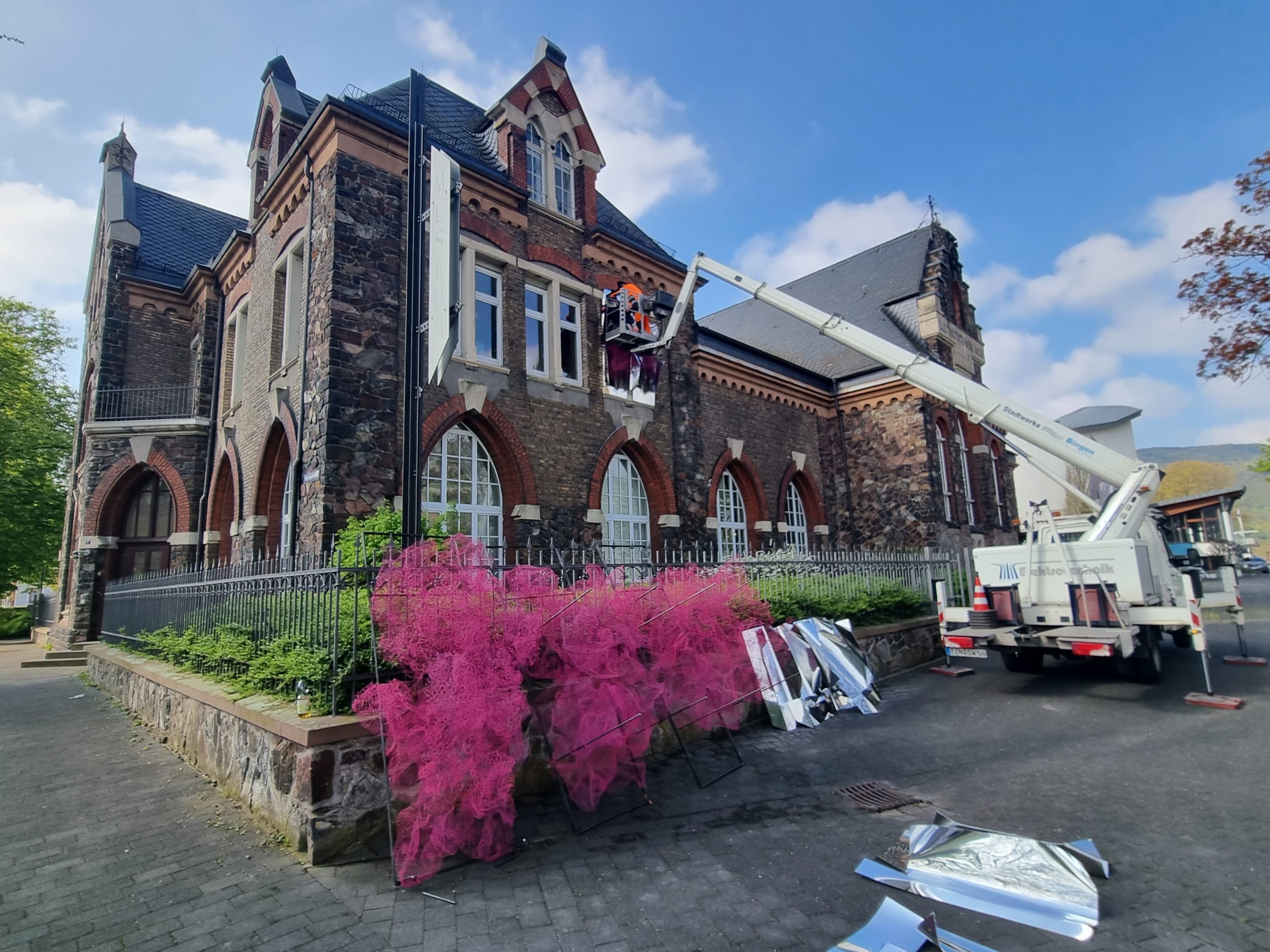
On the one hand, my bright pink clouds can contrast perfectly against the background and – as intended – really catch the eye. On the other hand, the question was how to safely install the clouds so that they stick out as far as possible into the air without making too many alterations to the building structure. And: as the Rhine flows north-west at Bingen, the façade facing the riverbank receives little direct sunlight. My thinking was that the effect I usually aim for in my installations – a bright appearance that changes depending on the incidence of light throughout the day – needed to be further enhanced here.
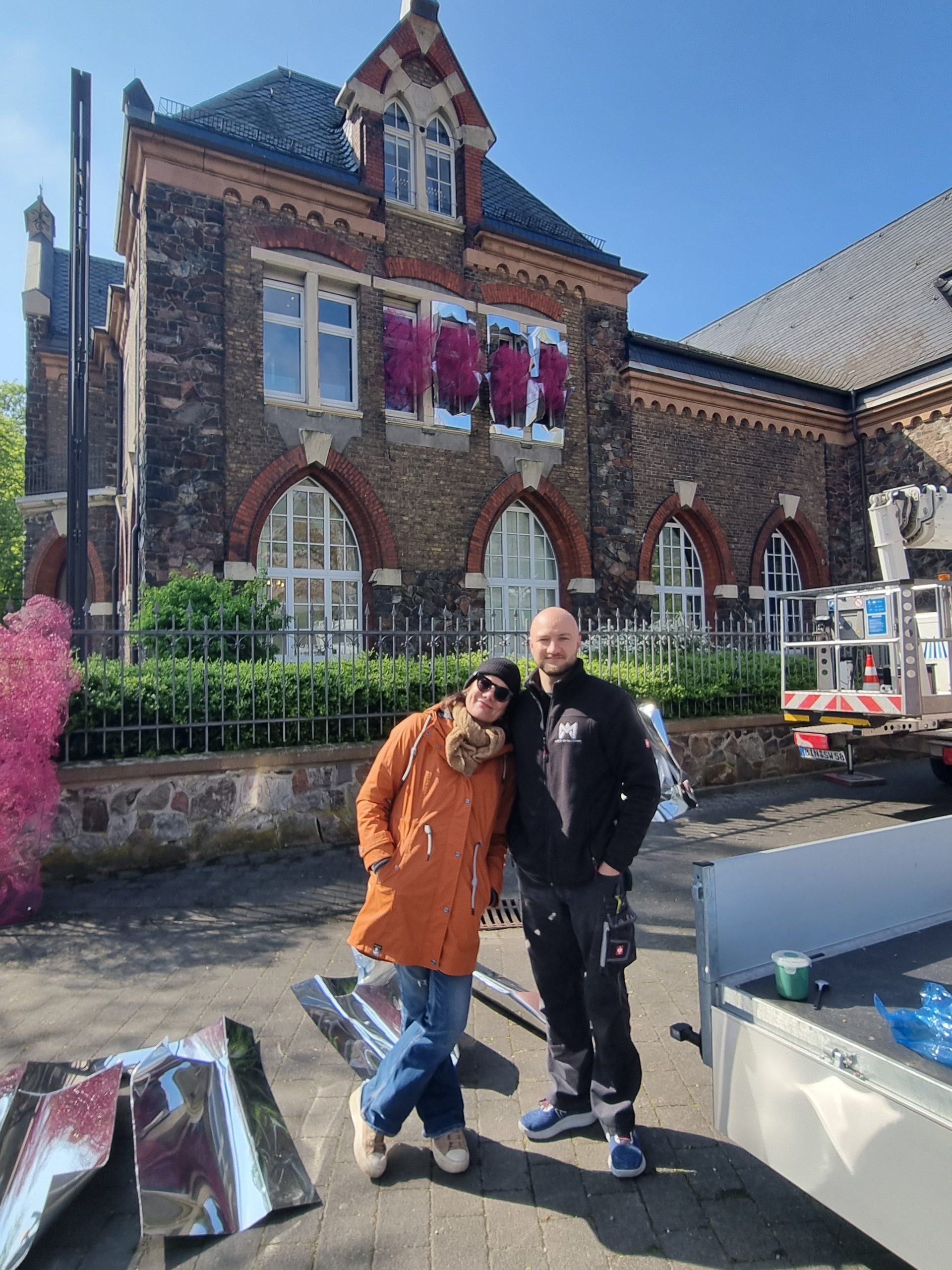
In these two areas, I could count on the well-established cooperation with two long-standing partners. My sons Marc and Alexander Seibert, who run a metalworking company together, created bespoke steel frames for me that allowed for minimally invasive mounting in the windows. And Oliver Schürings, managing director of PH Mechanik, not only supplied the surface-coated wire mesh as usual, but also provided me with six high-polished, extremely thin – and therefore easily workable – stainless steel sheets of the same dimensions.
These were fitted into the metal frames on site, cross-cut and bent outwards like wings. This allowed us, on the one hand, to reinforce the impression that the pink clouds are ‘bursting out’ of the building; on the other hand, the mirror-polished surfaces create additional, exciting light effects through their reflections.
Behind-the-scenes work on the installation
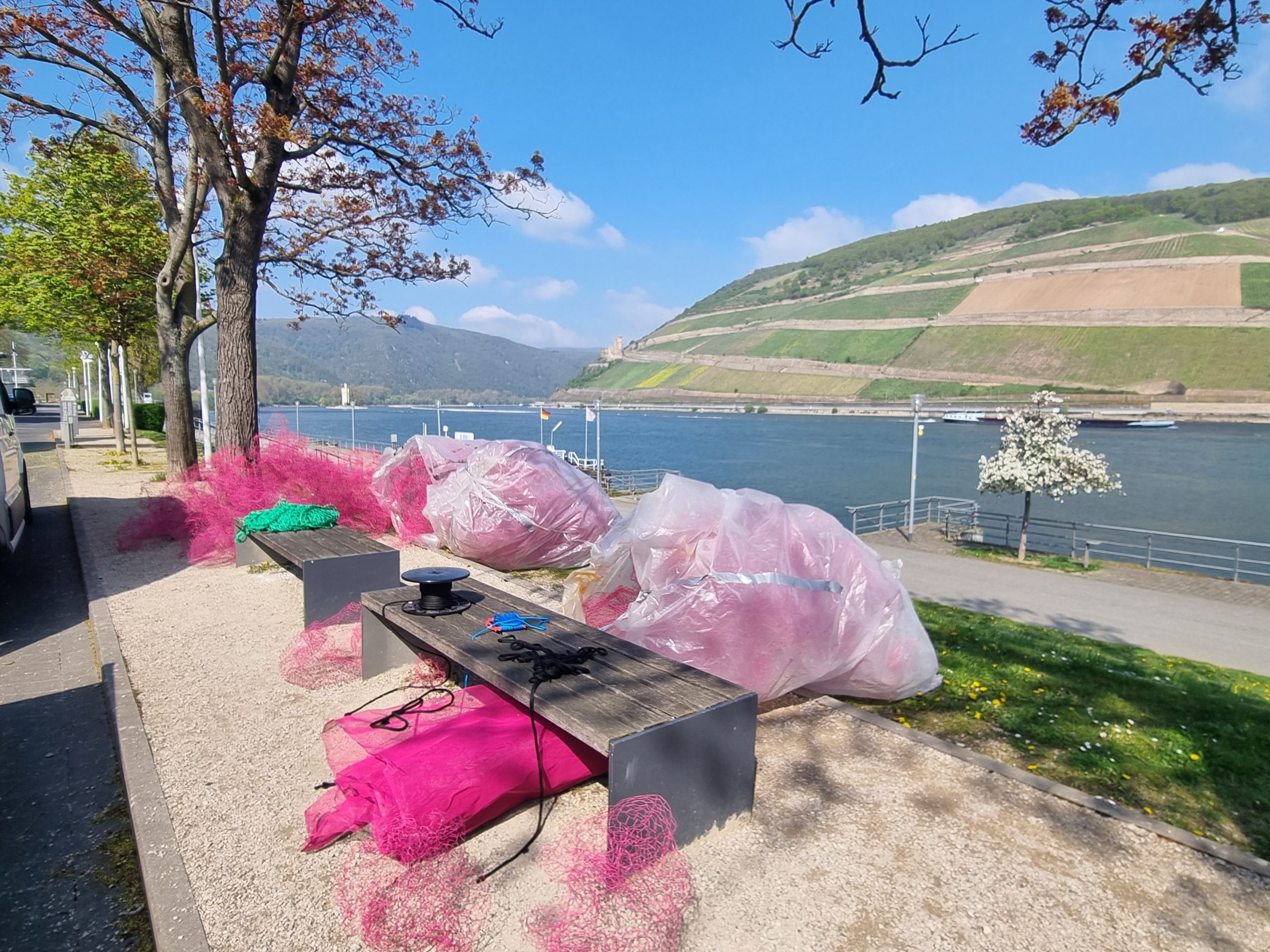
The installation in Bingen in mid-April took just over a day. This is mainly because my cloud structures consist of hundreds of small wire mesh bundles, which I had spent weeks preparing in advance and which I only assembled on site into the shape I had planned. I’d like to take this opportunity to thank Martina, Bernhard and Alex for their help in cutting and bending the sometimes stubborn material! Special thanks also go to Jörn Hoffmann and the curatorial board and to the staff of Stadtwerke Bingen, who supported me during the installation with their cherry picker, craftsmanship and patience.
The romantic Middle Rhine Valley is always worth a visit, come what may. The prospect of combining this with a few artistic touches will hopefully lead as many of you as possible to Bingen in the near future.