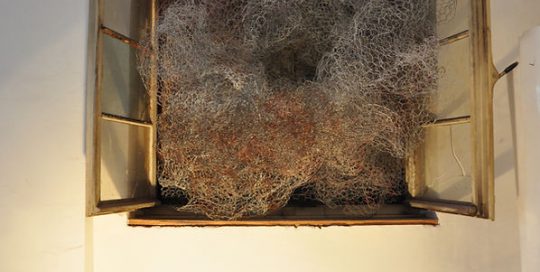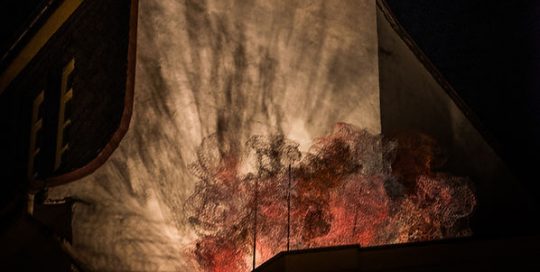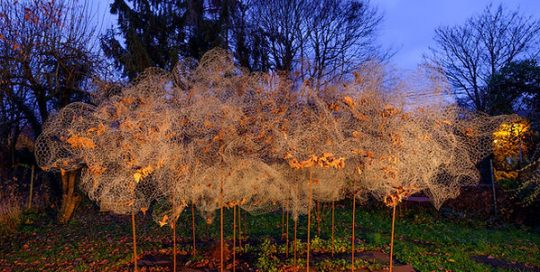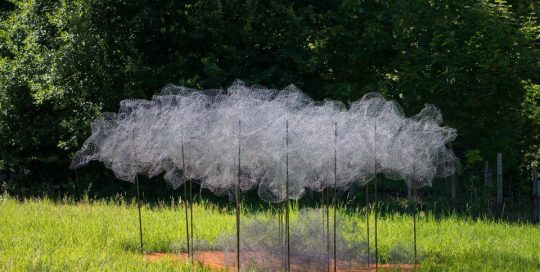

Once upon a time…
Meanwhile, my artistic work focuses on the series ‘Once upon a time…’, which was launched in 2015. With my large-scale installations, I interact with special locations in urban and rural areas. In the course of time, both the conceptual approach and the chosen materials have undergone a transformation.
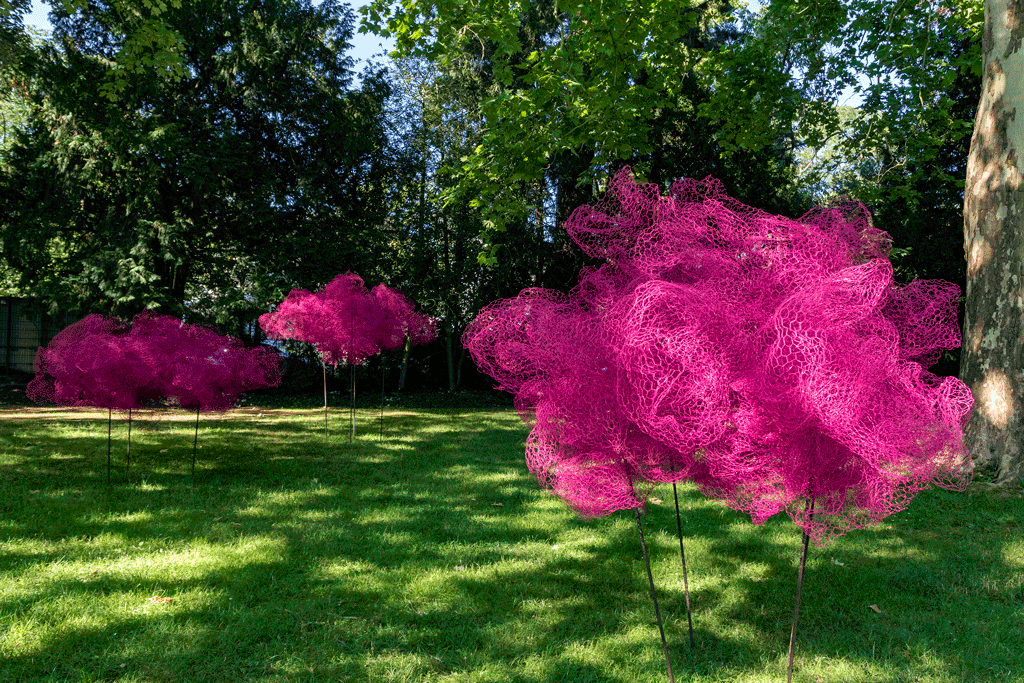
The series ‘Once upon a time…’ describes an ongoing story that began in nature and, in the course of its development, found more and more places where it could be realised. The title refers primarily to the process of transience, which is the central theme. The series is conceived as an installation and interacts with selected locations.
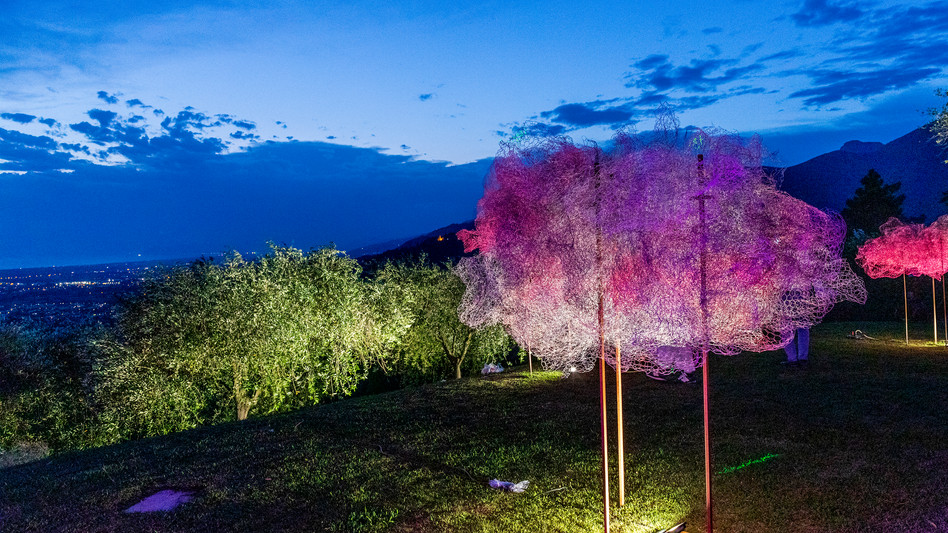
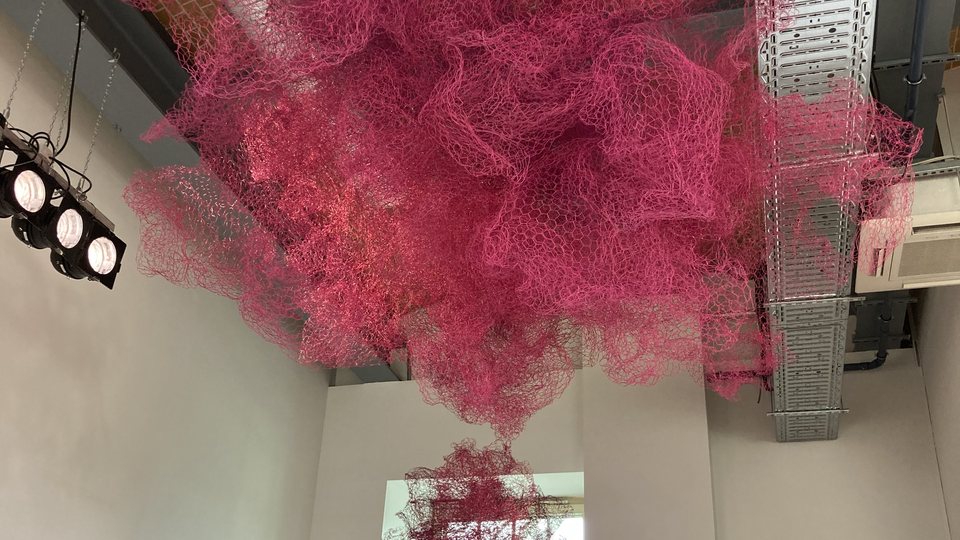
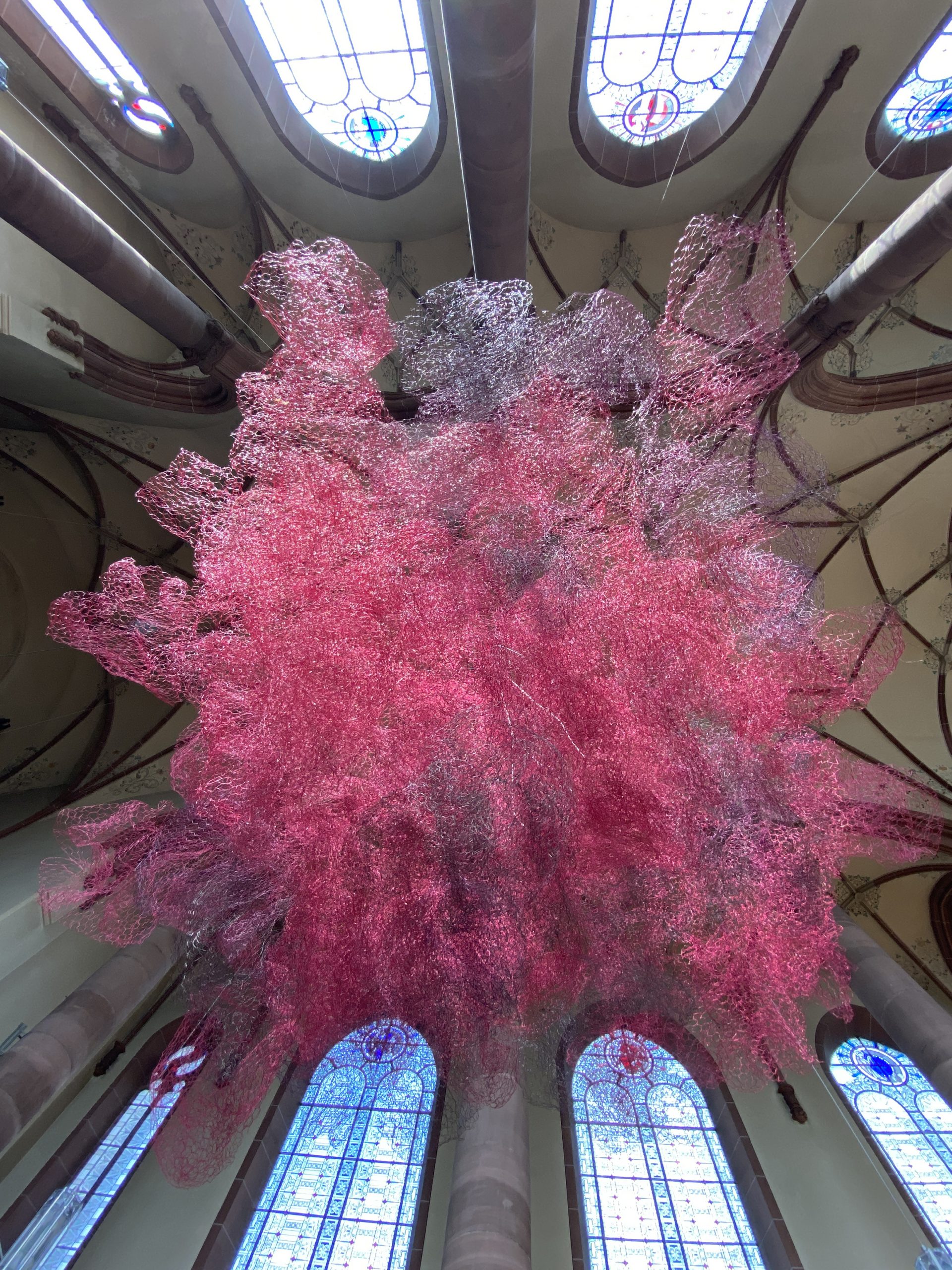
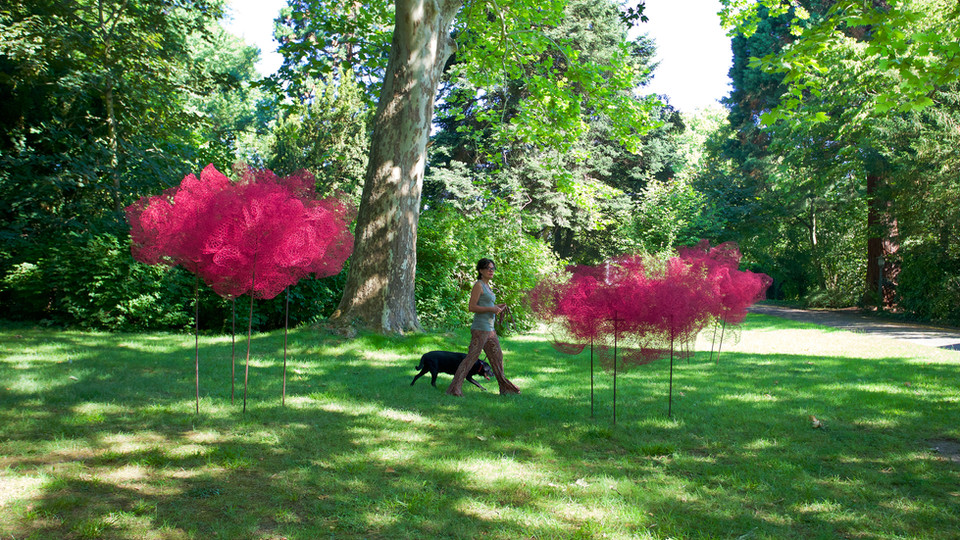
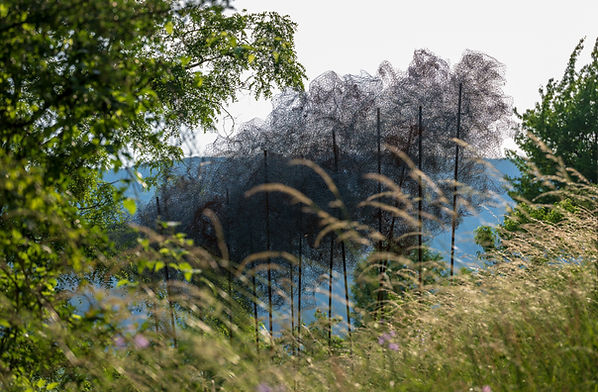
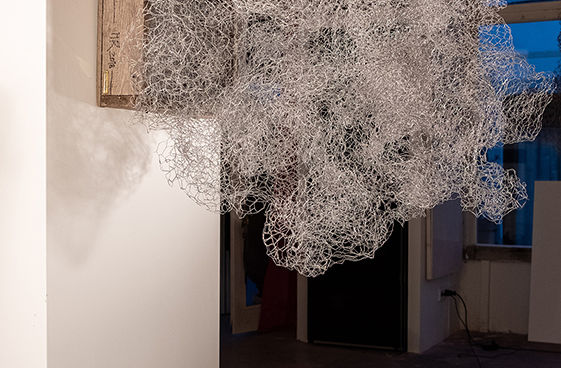
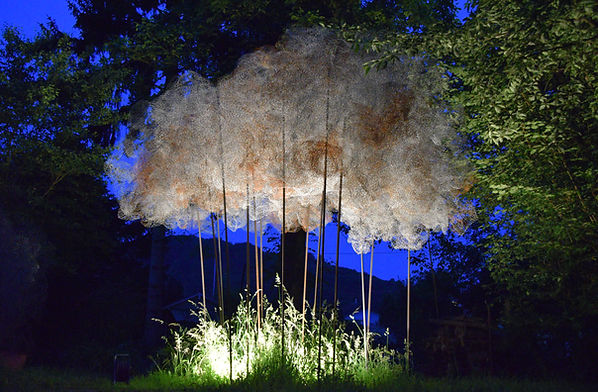
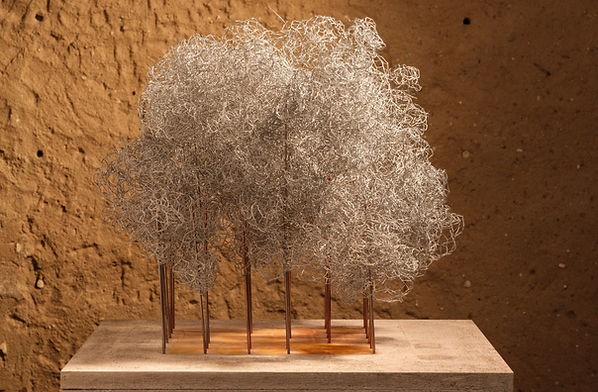
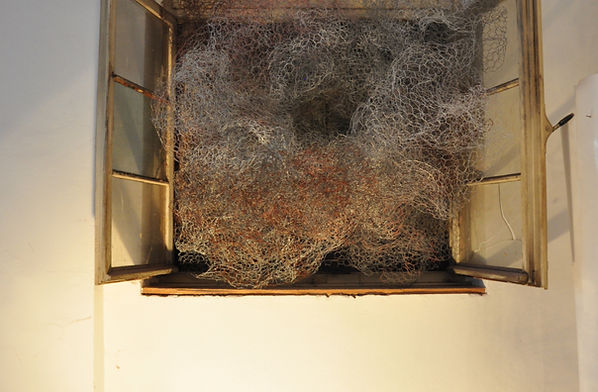
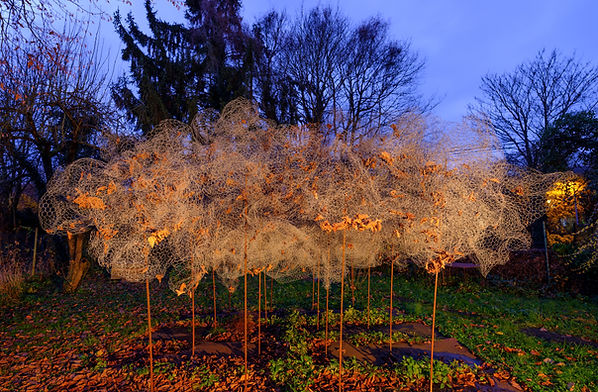
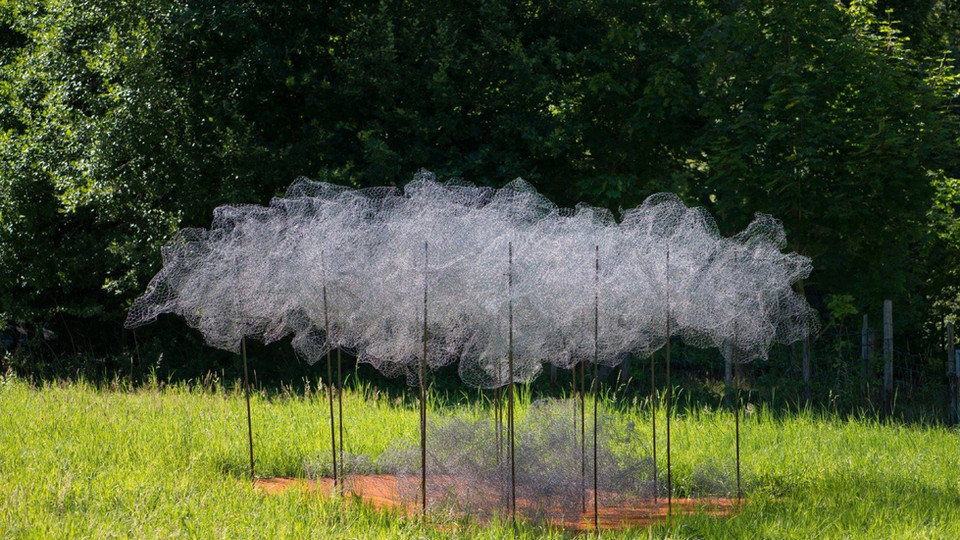
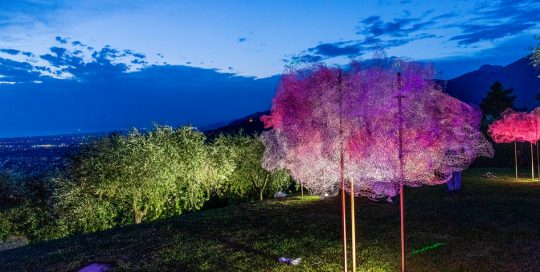
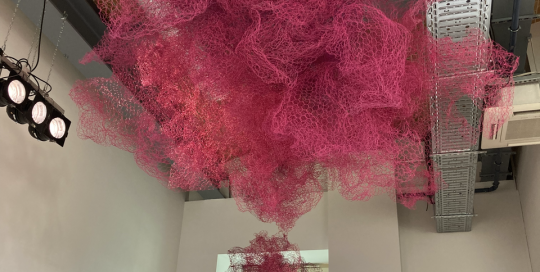
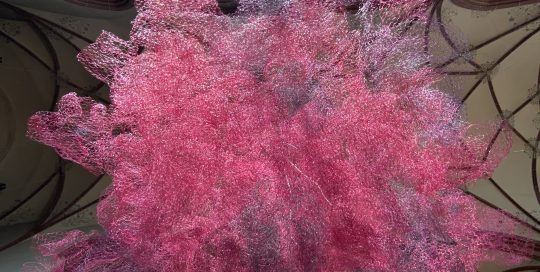
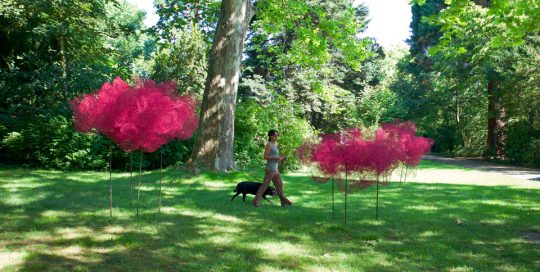
Most of these locations are found in nature or have a connection to urban space and aim to convey poetic messages of hope. The structural basis consists of rods sunk into the ground or fixed to base plates. The rods support a wild structure made of thin wire mesh (“chicken wire”).
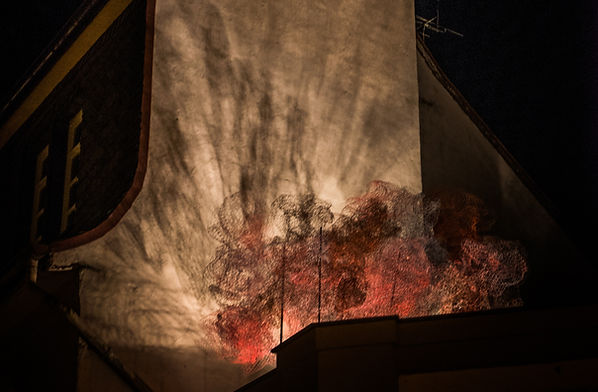
The resulting objects react to wind, weather and, of course, light. The wire reflects the light in all its manifestations. In bright sunshine, the effect is different than under cloudy skies or at night under artificial light. Depending on the background or surface, shadows are cast on the floor and the wall. However, the appearance of the light always remains immaterial and the form of the installation open.
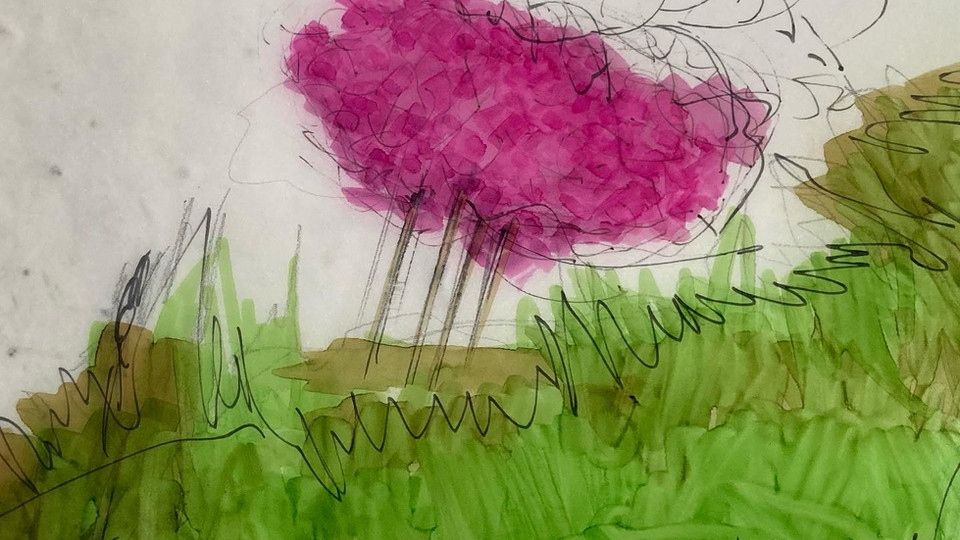
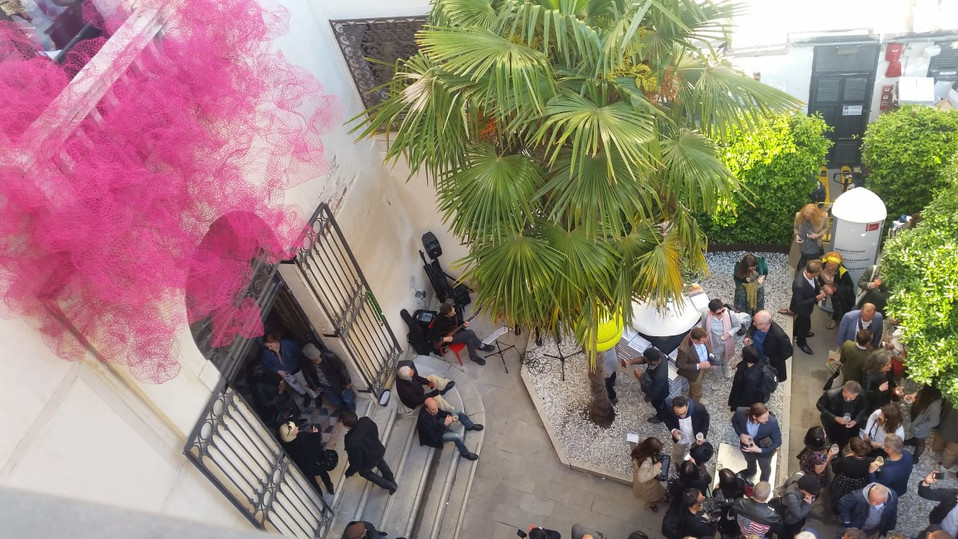
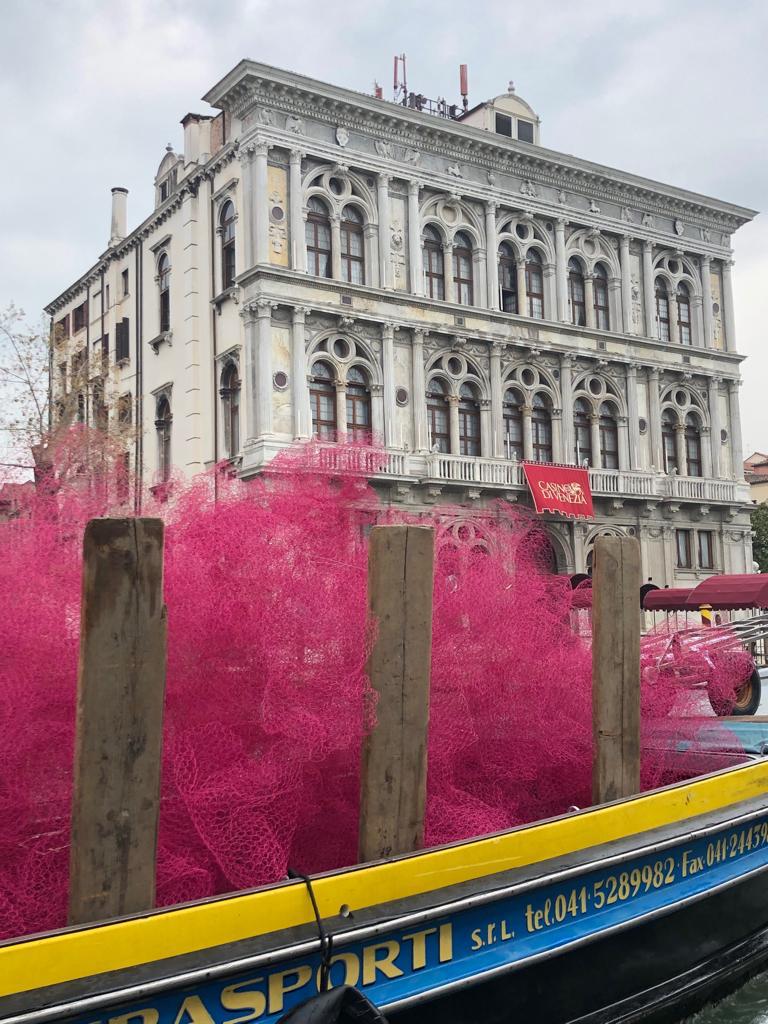
‘Once upon a time …’ initially used only untreated mesh wire across several chapters, exposed to nature and transience. Later, in urban spaces, the use of colour and coating followed, as the urban environment demanded a more strident call for attention. The colour pink was added.
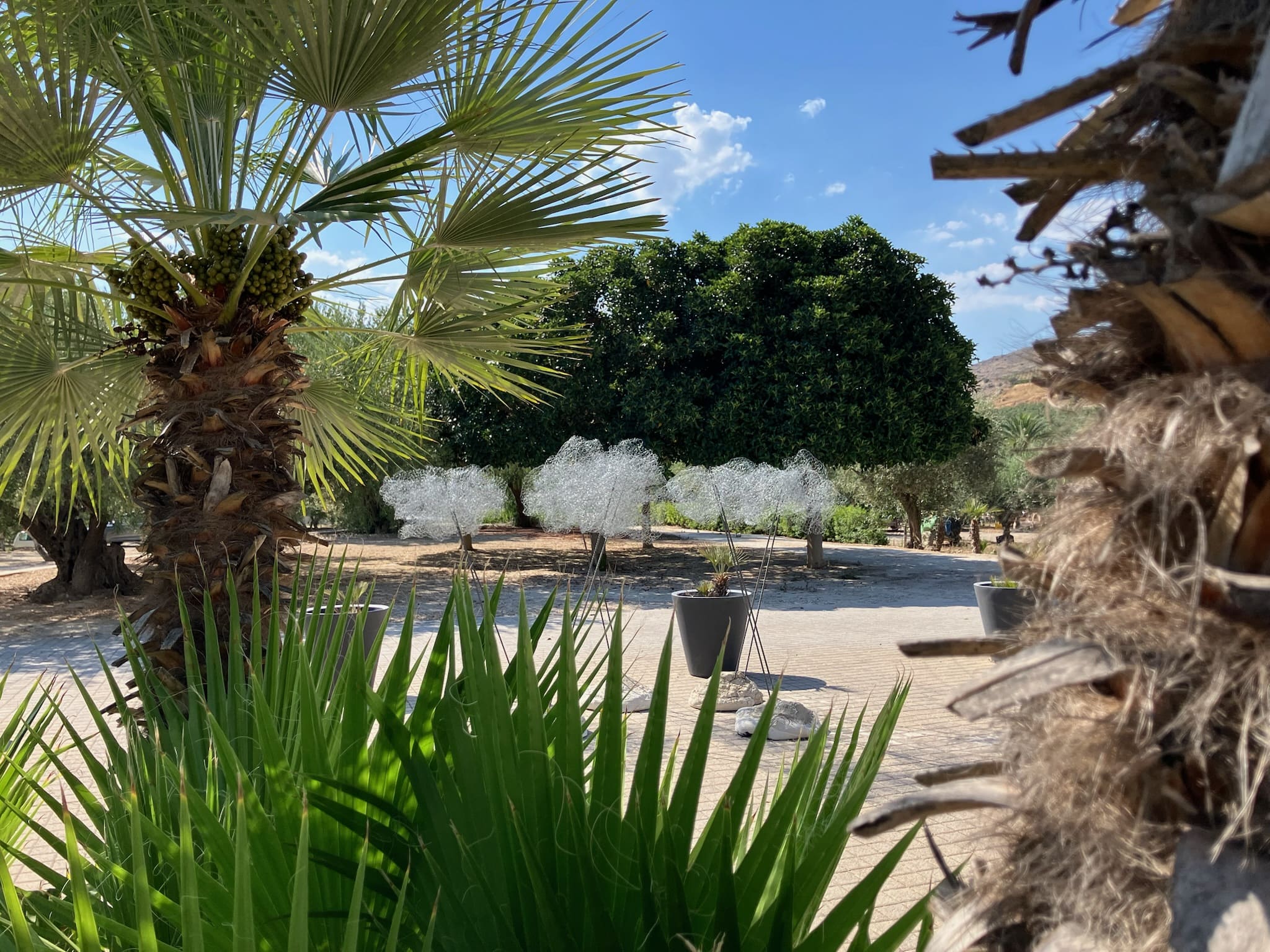
Over time, the series underwent various material expansions. One example of what triggered this development was an invitation to Sicily as an artist in residence in the summer of 2025, combined with the opportunity to visit a traditional farm that cultivates over 30,000 olive trees, almond trees and fruit trees (see below part 17).
During the ongoing process, it became clear that the material should not only be compacted with wire mesh, but also with used water hoses from the traditional irrigation systems on site.
Large and small installations, as well as sculptures, also use cement and concrete. They reflect the soil conditions of the island. The resulting objects react to wind, weather and, of course, light. The wire reflects the light in all its manifestations. It looks different in bright sunshine than under cloudy skies or artificial light at night.
Depending on the background or substrate, shadows are cast on the floor and walls. However, the appearance of the light always remains immaterial and the form of the installation open.
Join me on my journey!
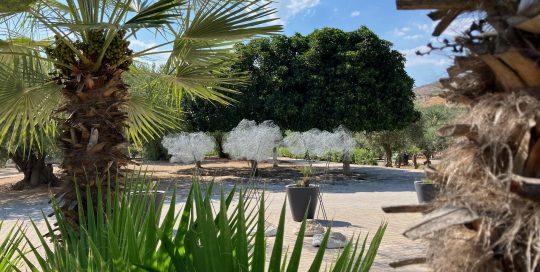
Once upon a time – Part 17
ARTELAGUNAPRIZE: Artist in Residence Mandranova, Sizilien
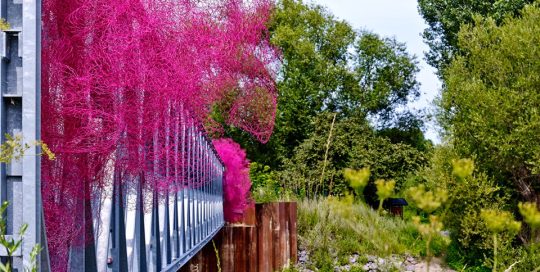
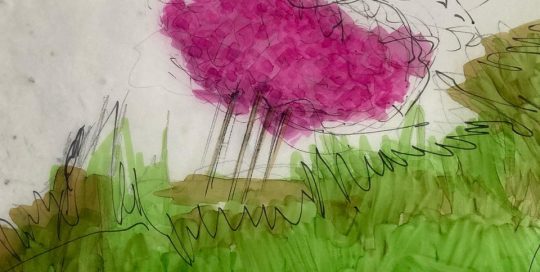
Once upon a time – Part 15
Pink Clouds for ÜHLEKLÜTZJE, Unkel Vineyards
Once upon a time – Part 13
Rhineland-Palatinate State Theatre
Once upon a time – Part 11
Pink Clouds, Fritz-Henkel-Park, Unkel
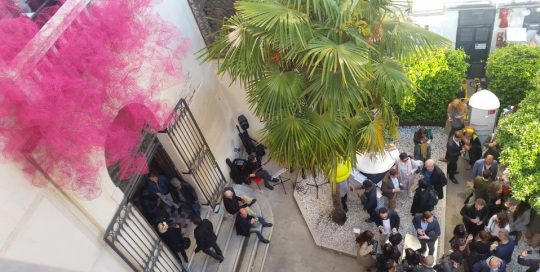
Once upon a time – Part 10
Unkel goes to Venice 58 Biennale di Venezia 2019

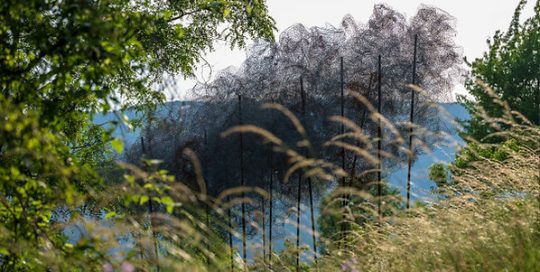
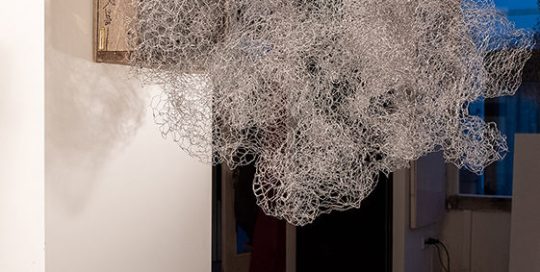
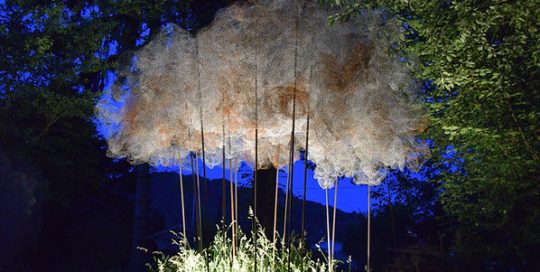
Once upon a time – Part 6
Installation in a garden in the historic town of Unkel
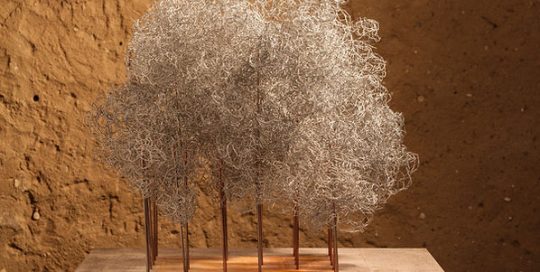
Once upon a time – Part 5
A model for power – sculpture, Berlin